Evidence and harm reduction
Vaping is not a health product. It is not medicine, it is not a wellness supplement, and no responsible retailer should market it as something that makes you healthier. So let's set that framing aside and answer the question that actually matters.
The real question is narrower and more useful: what does current research say about vaping compared to smoking combustible tobacco, and what does harm reduction mean for adult smokers in the UAE who are considering switching? Those are legitimate questions and they deserve accurate answers.
If you don't smoke
This is not a case for starting. The healthiest option is neither smoking nor vaping, and nothing below changes that. Vaping introduces nicotine dependence and inhalation risk without any comparative reduction in harm for you.
If you currently smoke
This article aims to give you an honest picture of what the evidence says — including where it's strong, where it's weak, and where it simply doesn't exist yet.
The comparison has to be vaping versus smoking
The most important context for any discussion of vaping and health is that the relevant comparison is not vaping versus doing nothing. It's vaping versus smoking. For a non-smoker, the healthiest choice is neither. For an adult smoker who is unable or unwilling to give up nicotine entirely, whether switching to vaping meaningfully reduces harm is a real and important question.
That distinction shapes everything that follows. Claims about vaping being "healthier" only mean anything relative to combustible tobacco. In isolation, any nicotine product carries risk. Set against cigarettes, the picture is meaningfully different.
What combustible tobacco actually does
Cigarette smoke contains more than 7,000 chemicals, at least 70 of them known carcinogens. The most harmful are products of combustion — burning tobacco at high temperature. Tar, carbon monoxide, benzene, formaldehyde, arsenic and dozens of other toxic compounds all come from burning. They are what drive lung cancer, COPD, cardiovascular disease and the rest of the toll of long-term smoking.
Nicotine itself, while addictive, is not the primary cause of smoking-related disease. It contributes to cardiovascular stress and is far from harmless, but the catastrophic health cost of smoking is driven mainly by what combustion produces, not by nicotine alone.
That is the foundation of the harm reduction argument. A vape heats e-liquid to produce vapour rather than burning a substance to produce smoke. Combustion, and the compounds it generates, is absent.
What the research currently shows
The "95 percent less harmful" figure
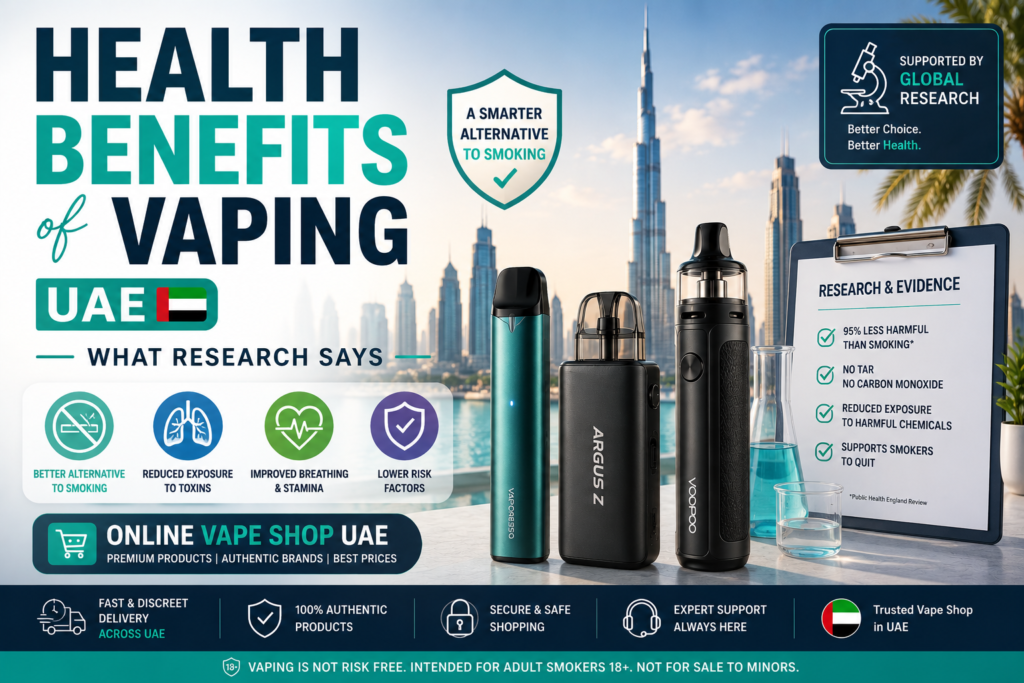
The most widely cited body of work comes from Public Health England, whose functions have since been split between the UK Health Security Agency and the Office for Health Improvement and Disparities. Their reviews concluded that vaping is substantially less harmful than smoking, and produced the widely quoted estimate that it is around 95 percent less harmful.
That figure deserves a caveat. It was always an expert estimate rather than a precise measurement, it has been criticised for overstating the certainty of the underlying evidence, and later reviews have leaned on it less. What is broadly agreed across the research community is narrower but still substantial: the harmful compounds in cigarette smoke are either absent from vapour or present at significantly lower levels. Carbon monoxide, one of the most immediately damaging, is effectively absent. Tar is absent. The carcinogens produced by combustion are absent or dramatically reduced.
Vaping compared to patches and gum
The Cochrane Collaboration, one of the most respected independent bodies in evidence-based medicine, maintains a continuously updated review of electronic cigarettes for smoking cessation. It finds that nicotine e-cigarettes help more people stop smoking than traditional nicotine replacement therapy — patches and gum — and the most recent updates rate that particular comparison as high-certainty evidence, among the strongest ratings Cochrane assigns.
That matters because smoking cessation is genuinely difficult and most available methods perform poorly in practice. It is also, notably, a finding about quitting smoking — not a finding about vaping being good for you.
What long-term research can't tell us yet
Vaping as a mass consumer behaviour is recent. Commercial e-cigarettes have only been widely available since the mid-2000s, and the products most UAE vapers actually use today — nic salt pod systems and modern high-puff disposables — are far newer than that. Studies tracking health outcomes across decades don't exist, because not enough time has passed.
So while short and medium-term evidence is broadly reassuring for smokers who switch, nobody can tell you with confidence what thirty years of daily vaping looks like. Any honest article has to say that rather than skip past it.
Where the research shows measurable differences
Respiratory function
Studies tracking smokers who switched to vaping against those who kept smoking consistently show improvement in respiratory symptoms among complete switchers — reduced cough, better lung function measurements, fewer episodes of respiratory illness. These improvements typically begin within weeks of stopping smoking and continue over the following months. Note the framing: this is damage reversal in ex-smokers, not a benefit that applies to anyone who takes up vaping without a smoking history.
Cardiovascular markers
Smoking damages the cardiovascular system through several mechanisms at once: carbon monoxide reducing oxygen-carrying capacity, nicotine raising heart rate and blood pressure, and combustion products inflaming arterial walls. Studies of smokers who switch show improvement in several of these, most clearly the elimination of carbon monoxide exposure and the associated normalisation of blood oxygen. Nicotine's direct cardiovascular effects continue for vapers — what's removed is the additional combustion-related burden.
Toxic biomarkers
Research measuring toxicant and carcinogen biomarkers in the urine and blood of switchers finds significant reductions in exposure — tobacco-specific nitrosamines, volatile organic compounds and other carcinogens all drop. That's consistent with what you'd expect once combustion, the primary source of those compounds, is removed.
Oral health
Smoking causes substantial oral damage: gum disease, tooth discolouration, oral cancer. Research on vaping suggests a substantially lower impact, though not zero — some e-liquid ingredients affect oral tissue and nicotine has known effects on gum health. Against smoking, the comparison is clearly in vaping's favour.
The honest balance
What the evidence currently supports, and what it doesn't.
Reasonably well supported
- Combustion products are absent. No tar, effectively no carbon monoxide, carcinogens absent or sharply reduced.
- Biomarkers drop after a full switch. Measured exposure to nitrosamines and volatile organic compounds falls significantly.
- Respiratory symptoms improve in smokers who switch completely, typically within weeks.
- It outperforms patches and gum for quitting smoking, at high certainty in the Cochrane review.
Not established
- Long-term outcomes. No decades-long data exists on daily vaping, because the products aren't old enough.
- Effects of inhaled flavourings over many years. Some compounds safe to eat behave differently when inhaled.
- Benefits from dual use. The evidence attaches to complete substitution, not to cutting down.
- Any benefit for non-smokers. There is no harm reduction where there was no prior harm.
What vaping is not free of
Honest reporting means being as clear about the risks as about the relative advantages.
Nicotine dependence
All standard vape products sold here contain nicotine, and nicotine is addictive. Switching removes the harmful combustion products but keeps the dependence. Trading one delivery method for another doesn't resolve the underlying addiction — it removes the most harmful way of feeding it.
Inhaling vapour
Putting any foreign substance into your lungs carries some risk. Vapour is substantially different from smoke and lacks the worst compounds, but the long-term effects of inhaling propylene glycol, vegetable glycerin, flavourings and nicotine over many years aren't fully understood. Some flavourings that are safe to eat have shown potential respiratory effects when inhaled, which is why responsible manufacturers have removed several from their formulations.
Nicotine and your heart
Nicotine raises heart rate and blood pressure and constricts blood vessels. For anyone with an existing cardiovascular condition, nicotine in any form carries risk. Vaping removes the carbon monoxide and combustion burden; it does not remove this.
EVALI
In 2019 a serious lung injury condition — e-cigarette or vaping product use-associated lung injury — emerged primarily in the United States. Investigation linked the vast majority of cases to vitamin E acetate, an additive found in illicit THC cartridges rather than in standard nicotine vaping products. It is not associated with regulated nicotine products, and vitamin E acetate is among the substances prohibited under the UAE standard. It remains a useful reminder that inhaling unverified substances carries serious risk, and that where you buy matters.
Young people
Outside the scope of an article written for adults, but worth stating: nicotine carries particular risks for young people whose brains and respiratory systems are still developing. The UAE's minimum age of 18 exists for that reason, and responsible retailers enforce it seriously.
What this means if you're a smoker in the UAE
A complete switch, with no continued cigarette use, is likely to significantly reduce your exposure to the most harmful compounds in smoke. The biomarker evidence, the respiratory evidence and the cardiovascular marker evidence all point the same way for people who switch fully.
Partial switching doesn't produce the same result. Dual use keeps the combustion exposure from the cigarettes you're still smoking. The benefits in the research attach to complete substitution, not to cutting down. The NHS guidance on using e-cigarettes to stop smoking makes the same point.
It isn't risk-free and the long-term picture isn't settled. Making an informed decision means weighing what we don't know alongside what we do.
For non-smokers, the evidence doesn't support starting. Harm reduction is an argument about replacing something worse. Where there's nothing worse to replace, it doesn't apply.
The UAE regulatory picture
Vaping products became legal to sell in the UAE in April 2019 under standard UAE.S 5030:2018, originally issued by the Emirates Authority for Standardisation and Metrology (ESMA). Following the 2020 government restructuring, ESMA was absorbed into the Ministry of Industry and Advanced Technology (MoIAT), which now oversees product certification through the Emirates Conformity Assessment Scheme (ECAS).
The standard covers ingredient restrictions, device and battery safety, child-resistant packaging, and bilingual Arabic and English health warnings on packaging. Several substances are explicitly prohibited in e-liquid, including vitamin E acetate and diacetyl.
We source exclusively from authorised distributors. Counterfeit and unverified products are present in the UAE market, and they matter for a specific reason: they may contain ingredients that simply aren't in legitimate products, and the health implications of those ingredients are entirely unknown. Everything in the harm reduction case above assumes a regulated product from a legitimate supply chain. Our UAE regulations and compliance page covers this in more detail.
Common questions
Is vaping healthier than smoking?
The research broadly supports the conclusion that vaping is substantially less harmful than smoking combustible tobacco, for adult smokers who make a complete switch. The most harmful compounds in cigarette smoke are products of combustion and are absent from vapour. That is not the same as vaping being healthy — it isn't risk-free, and the long-term effects of decades of daily use aren't established.
Does vaping cause lung disease?
Vaping with regulated nicotine products from verified manufacturers has not been shown to cause the severe lung diseases associated with long-term smoking. The 2019 EVALI outbreak was linked primarily to illicit THC cartridges containing vitamin E acetate, not to standard nicotine products. Some respiratory effects from inhaling vapour have been observed in research, but they differ substantially in nature and severity from smoking-related lung disease.
Is vaping effective for quitting smoking?
Cochrane's living review finds nicotine e-cigarettes more effective for smoking cessation than nicotine replacement therapies like patches and gum, and rates that comparison as high-certainty evidence. Results vary considerably between individuals, and complete substitution produces better outcomes than dual use.
Can a non-smoker vape safely?
There is no research basis for recommending that non-smokers take up vaping. The harm reduction argument applies specifically to smokers, for whom vaping is a less harmful alternative to continued smoking. If you don't smoke, don't start.
Are vaping products in the UAE safe?
Products sold through regulated, verified UAE retailers and certified under the MoIAT scheme are manufactured to defined safety standards covering ingredients, labelling and device safety. Buying from unverified sources carries additional risk from potentially non-compliant or counterfeit products.
How quickly do improvements appear after switching?
Research tracking respiratory and cardiovascular markers in people who switch shows measurable improvement beginning within weeks and continuing over subsequent months. Carbon monoxide levels typically normalise within days of stopping smoking.
Sources and further reading
If you've decided to switch
Everything below is sourced from authorised distributors and available through our online vape shop in the UAE. If you're new to any of this, our beginner's vaping guide explains device types and strengths from scratch.

RefillableMTL pod kit
Uwell Caliburn G2
A refillable kit gives you control over strength, which matters if reducing nicotine over time is part of your plan. The tight draw is close to the sensation of a cigarette, which helps a full switch stick.
د.إ130.00 د.إ150.00
View Caliburn G2
20mgNic salt
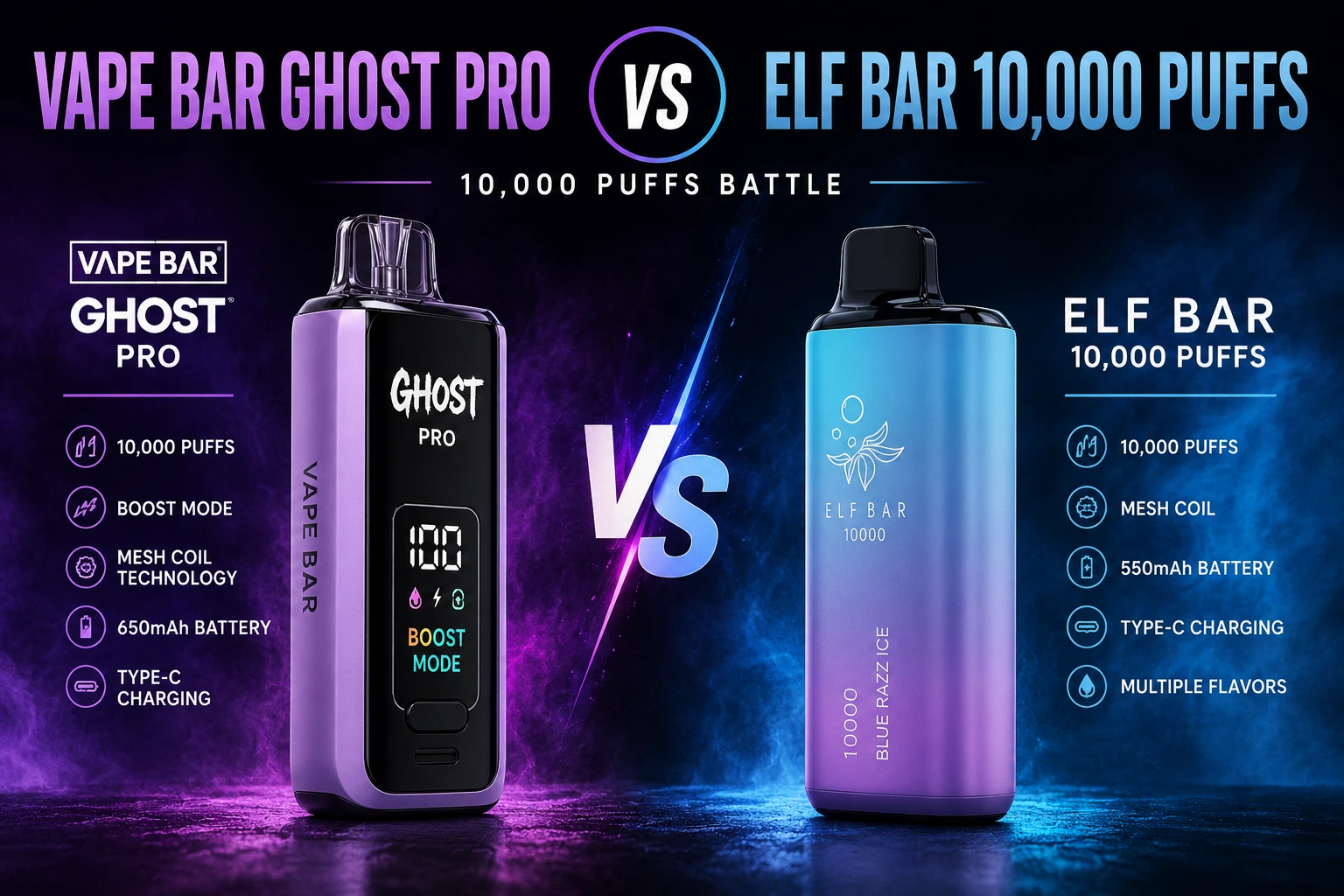
Elf Bar 10,000 Puffs
A moderate strength that suits lighter smokers making a complete switch, without the overshoot that puts new vapers off in the first week.
د.إ40.00 – د.إ370.00
View Elf Bar 20mg
20mgNic salt
Tugboat Master 10,000 Puffs
Another 20mg option with a different flavour range. Useful if you want to try more than one profile while working out what replaces your cigarette.
د.إ35.00 – د.إ280.00
View Tugboat Master 20mgHeavier smokers generally need a higher strength for a full switch to hold — you can compare the full range of devices and bottled e-liquids, or message our WhatsApp team with how much you currently smoke and we'll point you to the right strength rather than the most expensive product.
Verified products, honest advice
If you're an adult smoker in the UAE who has made an informed decision to explore vaping as an alternative to cigarettes, we stock pod kits, nic salt e-liquids and disposables suited to the switch — all sourced from authorised distributors.
Shop vape online in the UAESame-day delivery in Dubai, Abu Dhabi and Sharjah for orders before 6 PM. Next-day to Ajman, Ras Al Khaimah, Fujairah, Al Ain and Umm Al Quwain.
This article is informational and is not medical advice. Speak to a healthcare professional for guidance specific to your situation. Age restricted. Not for sale to anyone under 18. Intended for adult smokers — if you don't smoke, don't start. Products containing nicotine are not suitable during pregnancy or breastfeeding, or for anyone sensitive or allergic to nicotine, and should be used with caution by anyone with or at risk of an unstable heart condition or high blood pressure.