The summer climate across the United Arab Emirates is unforgiving. With ambient outdoor temperatures routinely exceeding 45°C (113°F) between May and September, enclosed environments like parked automobiles transform into dangerous solar ovens. For electronic cigarette users, understanding the electrochemistry of lithium-ion batteries is not merely a matter of device longevity—it is a critical fire safety imperative.
The Physics of Vehicle Greenhouses: Why Cars Become Thermal Hazards
Modern electronic vaporizers—whether they are compact disposable vapes, sleek refillable pod systems, or high-output box mods—are powered by high-energy-density lithium-ion or lithium-polymer cells. These chemical powerhouses are engineered to operate optimally within a narrow temperature window between 15°C and 35°C (59°F to 95°F).
When a car is parked in direct sunlight in Dubai, Abu Dhabi, or Sharjah during midday, solar radiation penetrates the vehicle’s glass windows. The dark surfaces of the dashboard, leather seats, and steering wheel absorb this energy, trapping heat through the greenhouse effect. Within just 20 to 30 minutes, vehicle cabin temperatures climb to 65°C to 75°C (149°F to 167°F), while surface temperatures on top of the dashboard can exceed a blistering 85°C (185°F).
The Mechanism of Thermal Runaway Explained
What happens chemically inside an overheated lithium-ion battery cell.
Thermal runaway is an unstoppable, self-sustaining exothermic chain reaction. Understanding this progression illustrates why leaving a device inside a glove compartment is an unacceptable risk:
The Solid Electrolyte Interphase (SEI) protective layer on the anode begins to decompose chemically, generating internal heat and releasing volatile organic gases.
The microscopic polyethylene or polypropylene separator between the positive and negative electrodes begins to melt, causing direct physical internal short-circuits.
The cathode decomposes, liberating oxygen into an environment of superheated organic solvent vapors. The resulting fire produces intense jet-like flames, toxic fluoride vapors, and explosive pressure venting.
Top 5 Battery Safety Commandments for UAE Vapers
Follow these strict operational protocols to maintain absolute hardware safety in the Arabian Gulf climate:
1. Never Leave Vapes Inside a Parked Vehicle
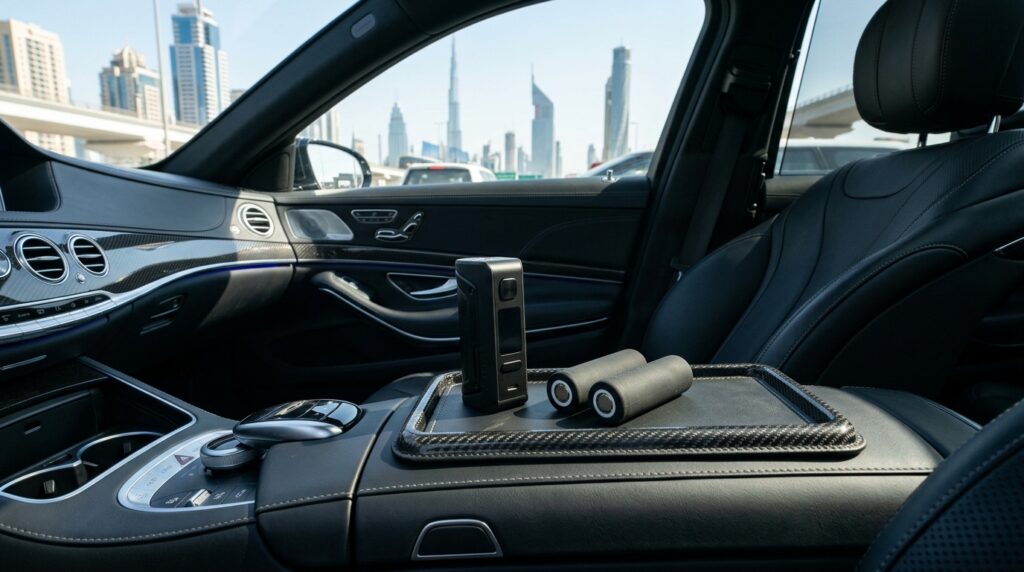
Treat your vape exactly as you would treat a high-end smartphone, laptop, or aerosol can. Even if you step away for a “quick 10-minute errand” at the supermarket, take your device with you in your pocket or bag. Glove boxes and center consoles offer zero insulation against conductive vehicle heat.
2. Always Use Protective Cases for Loose External Batteries
If you operate a dual-battery box mod utilizing external 18650 or 21700 cells, never let spare batteries rattle loose inside pockets, backpacks, or gym bags. If metal keys, coins, or zippers bridge the positive and negative terminals, a dead short occurs within milliseconds, resulting in severe burn injuries. Always store spares in rigid plastic or silicone protective battery sleeves.
3. Inspect PVC Battery Wraps Diligently
The thin plastic wrap surrounding an 18650 battery is its sole protective barrier. If you notice any tears, nicks, or frayed edges near the positive terminal ring, immediately stop using the cell. You can purchase affordable replacement heat-shrink wraps or safely recycle the cell at designated municipal battery drop-off bins.
4. Avoid High-Amp In-Car USB Fast Chargers
Many vehicle cigarette-lighter USB converters output erratic electrical voltages or force high-current fast charging (3A or 4A) onto small pod systems designed for gentle 5V/1A or 5V/2A input. Charging a device that is already warm from ambient desert heat with high-current charging exacerbates internal thermal stress. Always charge your devices indoors on flat, non-flammable surfaces.
5. Purchase Only Certified MoIAT / CE Compliant Devices
Certified hardware distributed by reputable vendors like BuyVaporUAE contains intelligent microchips equipped with overcharge protection, 8-to-10 second puff cut-off limits, low-voltage thresholds, and thermal sensors that shut down power before runaway occurs. Counterfeit gray-market clones frequently omit these vital safety circuits.
| Environmental Condition | Temperature Range | Impact on Vape Battery | Required Action |
|---|---|---|---|
| Air-Conditioned Indoor Space | 20°C – 24°C | Optimal performance & longest battery lifespan | Safe for standard usage and charging |
| Direct Dubai Sunlight (Outdoor) | 42°C – 48°C | Accelerated capacity degradation, e-liquid thinning | Keep device shaded in pocket or pouch |
| Parked Car Dashboard (Midday) | 65°C – 85°C+ | Critical danger: Separator breakdown & venting | NEVER LEAVE DEVICE IN VEHICLE |
| Vehicle Glovebox / Trunk | 55°C – 70°C | Severe thermal stress, swollen pouch cells | Remove device immediately upon parking |
Emergency Protocol: What to Do If Your Device Overheats
If your vape device suddenly feels abnormally hot to the touch, emits a hissing or whistling noise, swells noticeably, or releases a pungent chemical or sweet burning odor:
- Do NOT Inhale: Immediately place the device down away from your face and body.
- Move to a Non-Flammable Surface: Place the device outdoors on concrete, tile, or bare dirt, well away from curtains, car seats, beds, or rugs.
- Do NOT Submerge in Water: Lithium reacts vigorously with water to produce flammable hydrogen gas. Use a class D dry powder fire extinguisher or allow the unit to vent safely in an isolated outdoor area.
- Ventilate the Area: Do not breathe in the white smoke or outgassed vapors, which contain toxic hydrofluoric acid and volatile organic compounds.
Explore Genuine MoIAT-Approved Collections
Browse authentic vape products with same-day express delivery across Dubai, Abu Dhabi, and all Emirates:
- Shop top-rated disposable vapes in UAE with up to 25,000 puffs.
- Explore durable refillable pod systems & starter kits for everyday carry.
- Order premium salt nicotine & freebase e-liquids in 20mg to 50mg strengths.
- Keep extra replacement coils & pod cartridges on hand to ensure fresh flavor.
- Browse certified vape accessories and Type-C charging cables.
Frequently Asked Questions: Vape Battery Safety
Can a disposable vape explode if left inside a car in Dubai?
Yes, disposable vapes contain lithium-ion pouch cells that lack the rigid steel casings of cylindrical batteries. When exposed to summer cabin temperatures of 70°C+, internal gas pressure builds rapidly, potentially causing the pouch to rupture, melt the plastic shell, and ignite vehicle upholstery.
Is it safe to charge my vape overnight while sleeping?
It is best practice to avoid overnight charging. While authentic devices have auto-shutoff chips, leaving devices connected to power bricks on beds, pillows, or wooden nightstands creates an unnecessary hazard. Disconnect your device once the LED indicator confirms a 100% full charge.
Why does my vape get warm while taking multiple puffs?
A slight warming of the atomizer tank or casing during consecutive draws is normal because the resistance coil generates temperatures between 180°C and 220°C. However, if the lower battery chassis becomes uncomfortably hot to hold, allow the unit to rest for 5 minutes before resuming.
What is the safest way to travel with vape batteries on Emirates flights?
Under UAE General Civil Aviation Authority (GCAA) and ICAO international safety regulations, all electronic cigarettes and loose lithium batteries must be packed exclusively in your carry-on cabin baggage. They are strictly prohibited from checked luggage in the aircraft cargo hold.
Safety references: Dubai Civil Defence public fire prevention advisories; International Electrotechnical Commission (IEC) standard 62133-2 (Safety requirements for portable sealed secondary lithium cells); UAE General Civil Aviation Authority (GCAA) Dangerous Goods Regulations.
Shop Genuine Vapes Online in UAE
Browse our extensive collection of 100% authentic, MoIAT-approved vaping devices and e-liquids with rapid delivery across the UAE.